Category: Publications
-
Global Commons Working Group
The New Weapon of Choice: Technology and Information Operations Today
In recent years, a growing number of governments, non-state actors, and citizens have rapidly expanded their use of pernicious information operations against other countries and even their fellow citizens. Social media and the internet have become the main tool. The current technological revolution has lowered the cost of entry for those wishing to spread misinformation and disinformation. Some use the internet to propagate an alternative version of the global order they seek to dominate, to damage a regional rival, or to influence their own or others’ elections. The players, tactics, tools, and topics will continue to expand in the months and years ahead,…
-
Case Studies
Case 350. The Customer is Always Wrong: The Airbus A220 and U.S. Trade Law
The case focuses on the events leading up to the January, 2018 ruling by the U.S. International Trade Commission (ITC) overturning anti-dumping and countervailing duties imposed by the U.S. Department of Commerce (DoC) on imports of the CSeries commercial jet, produced by Bombardier, Inc., a Canadian company. The decision—and the imposition of the initial duties by the U.S. DoC—fundamentally reshaped the global aerospace industry. It led the two largest manufacturers (Airbus and Boeing) to essentially take over significant portions of the third and fourth largest manufacturers (Bombardier of Canada and Embraer of Brazil, respectively). ISBN: 978-1-56927-056-1 | Published: 2020
-
Case Studies
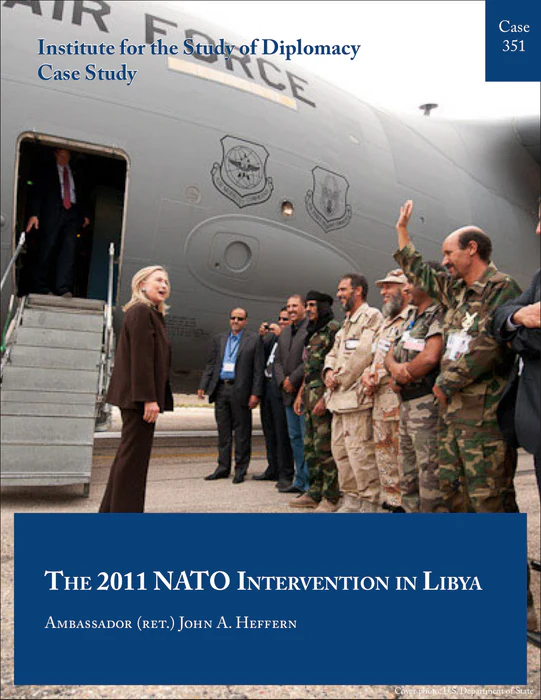
Case 351. The 2011 NATO Intervention in Libya
This case examines NATO’s decision to intervene in Libya in 2011. Drawing on the author’s experience as Deputy Chief of Mission at the U.S. Mission to NATO, the case assesses the decision-making processes in Washington, New York (the UN), and Brussels (NATO) that led the international community to launch a military operation in Libya under United Nations Security Council Resolution 1973. Through engagement with this case, students will develop an understanding of the opportunities and constraints of multilateral approaches to military intervention. The Libya crisis enables students to see the pros and cons of NATO-led operations and so-called coalitions of…
-
Global Commons Working Group
The Rise of Metropolitanism: The International Order and Sub-National Actors
The growth and international clout of cities and sub-state actors has been unparalleled in recent decades. These players seek agency in the international arena, forming networks at the sub-state level that help shape new organizing principles for international cooperation on Global Commons issues like climate, health, transnational crime, and migration. These types of issues will continue to create opportunities for sub-national leadership to help shape outcomes beneficial for all—not just cities and states—through systematic interactions, a stronger connection up and down between cities, states, national capitals, and international bodies, and a larger voice for sub-national actors on Global Commons issues.…
-
Global Commons Working Group
Religious Intolerance and America’s Image and Policies Abroad
The Oct. 27, 2018 attack on worshipers in Pittsburgh’s Tree of Life synagogue was a stark reminder that hate crimes and religious persecution threaten not just individuals and communities, but undermine fundamental human freedoms. A new ISD report on “Religious Intolerance and America’s Image and Policies Abroad” examines the rise in domestic hate crimes against Jews, Muslims, and other faith communities in America – and how the impact of domestic religious intolerance and bigotry extends far beyond the U.S. border. The report, based on a March 2018 working group and public forum with experts from the diplomatic corps, academia, nongovernment…
-
Global Commons Working Group
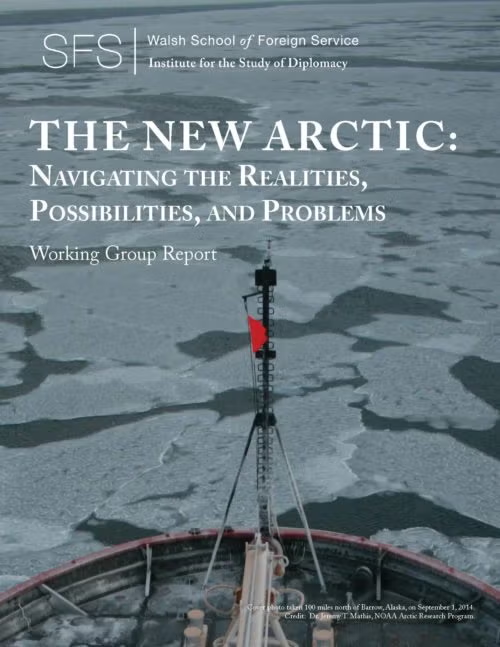
The New Arctic: Navigating the Realities, Possibilities, and Problems
A July 2018 ISD report on “The New Arctic: Navigating the Realities, Possibilities, and Problems” explores the implications of the New Arctic, and the broader geopolitical repercussions of these changes. The Arctic region has become a New Global Common. Increasingly navigable seaways and new access to natural resources create both opportunities for greater collaboration between Arctic and non-Arctic nations, as well as potential flashpoints, environmental disasters, and threats to indigenous communities. The challenge is to mitigate all of these potential threats, and develop the policies, partnerships, and infrastructure to help guide Arctic diplomacy in the decades to come.
-
Global Commons Working Group
The New Arctic: Navigating the Realities, Possibilities, and Problems
A July 2018 ISD report on “The New Arctic: Navigating the Realities, Possibilities, and Problems” explores the implications of the New Arctic, and the broader geopolitical repercussions of these changes. The Arctic region has become a New Global Common. Increasingly navigable seaways and new access to natural resources create both opportunities for greater collaboration between Arctic and non-Arctic nations, as well as potential flashpoints, environmental disasters, and threats to indigenous communities. The challenge is to mitigate all of these potential threats, and develop the policies, partnerships, and infrastructure to help guide Arctic diplomacy in the decades to come.
-
Global Commons Working Group
New Challenges to Human Security: Environmental Change and Human Mobility
From bustling megacities to remote Pacific islands, climate change has profound implications for how people live and work — and whether conflicts over water, land, and other resources become local or global security challenges. To analyze how environmental shifts shape both internal and external patterns of migration, the Institute for the Study of Diplomacy’s New Global Commons working group met in late 2016 to explore the nexus between climate change and human security. The working group’s report, “New Challenges to Human Security: Environmental Change and Human Mobility,” summarizes these discussions and provides a set of guiding principles for policymakers, non-governmental…